
Scientists Explain Sun’s Plasma Rain
Solar Rain Mystery Unraveled

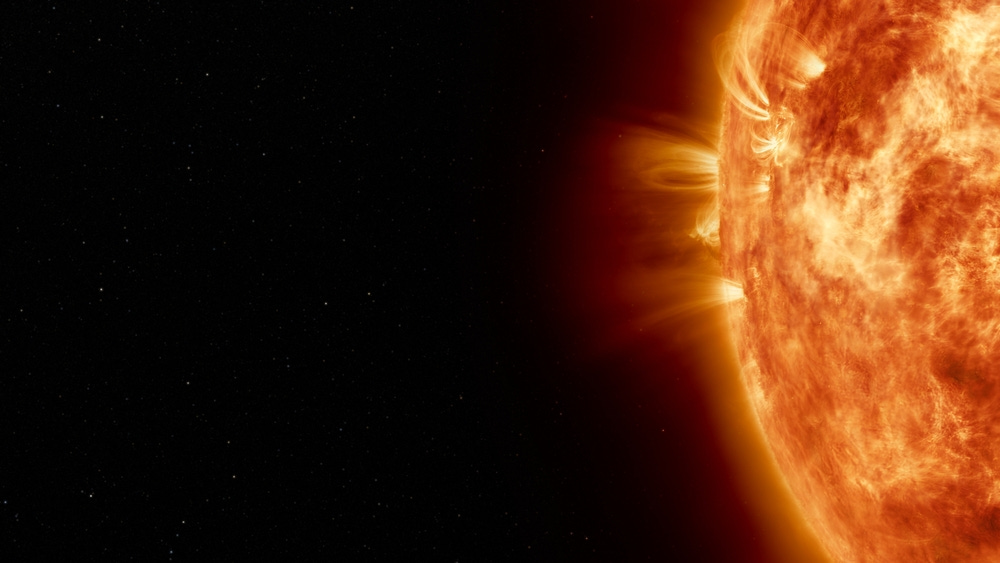
The Sun, a fiery giant, experiences rain—an astonishing phenomenon now explained by scientists.
Quick Take
Solar rain is composed of cooling plasma.
University of Hawaiʻi researchers have unraveled the mystery.
Solar flares play a crucial role in creating this rain.
Iron and other elements are key to the process.
Unveiling Solar Rain
Researchers at the University of Hawaiʻi have demystified a fascinating solar phenomenon: rain on the Sun. Unlike terrestrial rain, solar rain is composed of cooling plasma that descends back to the Sun’s surface. This intriguing process occurs during solar flares, which are intense bursts of radiation. The cooling plasma forms rapidly, and the mystery of this solar rain has puzzled scientists until now.
The research team employed advanced modeling techniques to simulate the Sun’s environment. By focusing on time-varying elements like iron, they were able to replicate conditions that lead to the formation of solar rain. Iron, in particular, plays a significant role due to its ability to influence the cooling and condensation processes occurring in the Sun’s atmosphere.
https://x.com/Zicutake/status/1978477530341335181
The Role of Solar Flares
Solar flares are powerful eruptions on the Sun’s surface that release vast amounts of energy. These flares can influence space weather and have effects on Earth’s own environment. During these flares, the Sun’s magnetic fields become twisted and distorted, causing the plasma to cool and fall back to the surface, creating what we refer to as solar rain.
Understanding solar flares is crucial for predicting space weather, which can impact satellites, communication systems, and even power grids on Earth. The insights gained from this study not only solve a long-standing mystery but also enhance our understanding of solar dynamics and their potential effects on human technology.
Watch: Solar Rain Caught on Camera! High-Def Plasma Shower Images - YouTube
https://youtube.com/shorts/LpFotMWqLL0?si=pk0mJ2N_2LV5-b7k
A Closer Look at Plasma Dynamics
Plasma, the fourth state of matter, consists of charged particles and is prevalent in the Sun’s atmosphere. The cooling and condensation of plasma during solar flares result in the formation of solar rain. The University of Hawaiʻi researchers utilized sophisticated computer models to observe these processes in action, shedding light on the intricate dance of particles within the Sun’s magnetic fields.
The interplay of electromagnetic forces and particle dynamics creates a complex environment where plasma can cool rapidly, leading to the formation of solar rain. This research provides a clearer picture of how these elements interact, offering valuable insights into the behavior of the Sun and its impact on the solar system.
Implications for Future Research
The discovery of solar rain’s formation mechanisms opens new avenues for scientific exploration. Understanding these processes could lead to more accurate models of solar activity, improving predictions of solar flares and their potential impacts on Earth. Additionally, this research contributes to the broader field of astrophysics, offering clues about the behavior of other stars and stellar phenomena.
As scientists continue to explore the mysteries of the Sun, this breakthrough underscores the importance of collaboration and innovation in advancing our knowledge of the universe. The insights gained from this study not only solve an intriguing puzzle but also pave the way for future discoveries in solar physics and beyond.
Sources:
https://www.sciencedaily.com/releases/2025/10/251015032312.htm